
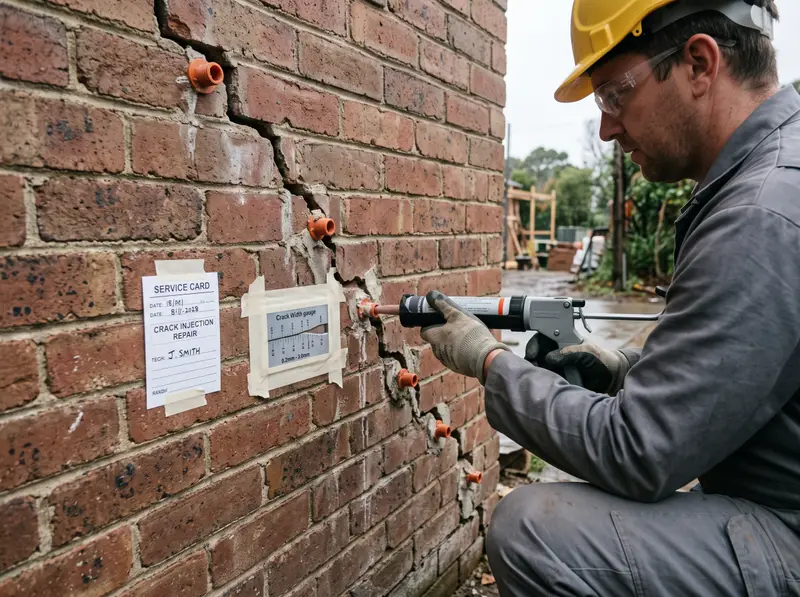
A crack is repaired once it has stopped changing. Filling one that is still opening buys a season and destroys the only record you had of how fast the house was moving.
Why the Seattle seasons matter to the timing
The largest soil mapped here is rated Moderately well drained for drainage, and the fastest of the largest mapped soils takes water in at 17.72 inches an hour. Ground beside a foundation is wetter after rain and firmer after a dry spell, and some of what one season opens will close again in the next. Measuring across that swing rather than within it is what separates seasonal movement from movement that is going somewhere.
The reasoning behind that
The sequence is measure, wait, repair. A dated photograph with a ruler in the frame, repeated after a few months, costs nothing and answers the only question that matters. An elevation survey answers it better and additionally says whether the movement is settlement or heave, which want opposite responses. Filling early is not neutral. The filler hides the crack, so the next three months produce no visible evidence, and the movement continues underneath. When it reappears you have lost both the money and the timeline. There is one exception worth naming. Where a crack is actively admitting water into a structure, sealing it is a water problem being solved rather than a structural one, and it can be worth doing on those terms while the measurement continues. Nobody can tell you from a photograph whether yours has stopped. That is not caution, it is a statement about what a photograph contains.
Every question, in one place: Seattle Foundation Repair Co questions.
Check the Seattle Foundation Repair Co service area to see whether your street is covered.
Back to Seattle Foundation Repair Co.